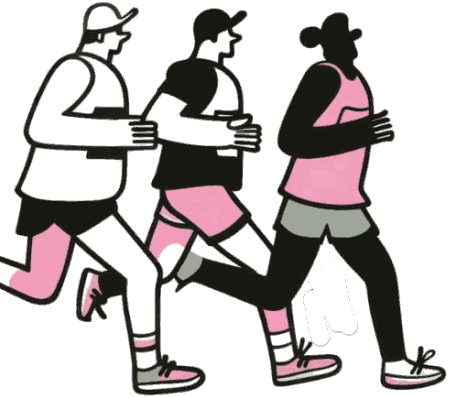
Your foot should land under you, not out in front of you.
The instinct, when you want to go faster, is to reach — longer steps, foot further forward. It is the wrong instinct, and it has a name.
Overstriding
If your foot lands well ahead of your hips with the leg straight, three things happen at once, none of them good.
- You brake. The ground pushes back against your forward motion every step.
- The impact goes up a straight leg into your knee and hip, rather than being absorbed by a bending one.
- You have to work to get going again after each landing.
You can feel it: a heavy, slapping sort of run that leaves your shins and knees sore.
What to aim for instead
Your foot wants to land more or less under your centre of mass, with the knee softly bent, and your shin close to vertical. Whether you land on your heel or your midfoot matters much less than where that foot is relative to your hips.
How to fix it without thinking about your feet
Trying to consciously shorten your steps while running is miserable and rarely sticks. The reliable fix is indirect: raise your cadence by about five percent and your stride shortens on its own. There is nowhere else for it to go.
A short hill also does it for free. Nobody overstrides uphill — the ground arrives too early. Two or three minutes up any of the streets off Saryan and your form sorts itself out.
But stride length does grow
As you get fitter and stronger your stride lengthens by itself, from the back: you push further behind you rather than reaching further ahead. That is the version you want, and it arrives on its own if you keep running and do a bit of strength work.